In the fast-evolving world of artificial intelligence, OpenClaw AI has emerged as a game-changer, captivating developers, businesses, and everyday users alike. This open-source framework, which exploded onto the scene with unprecedented GitHub growth, promises to transform how we interact with AI agents. By enabling autonomous tasks through familiar chat apps, OpenClaw AI bridges the gap between human intent and machine execution, making advanced AI accessible without the steep learning curve.
What Is OpenClaw AI?
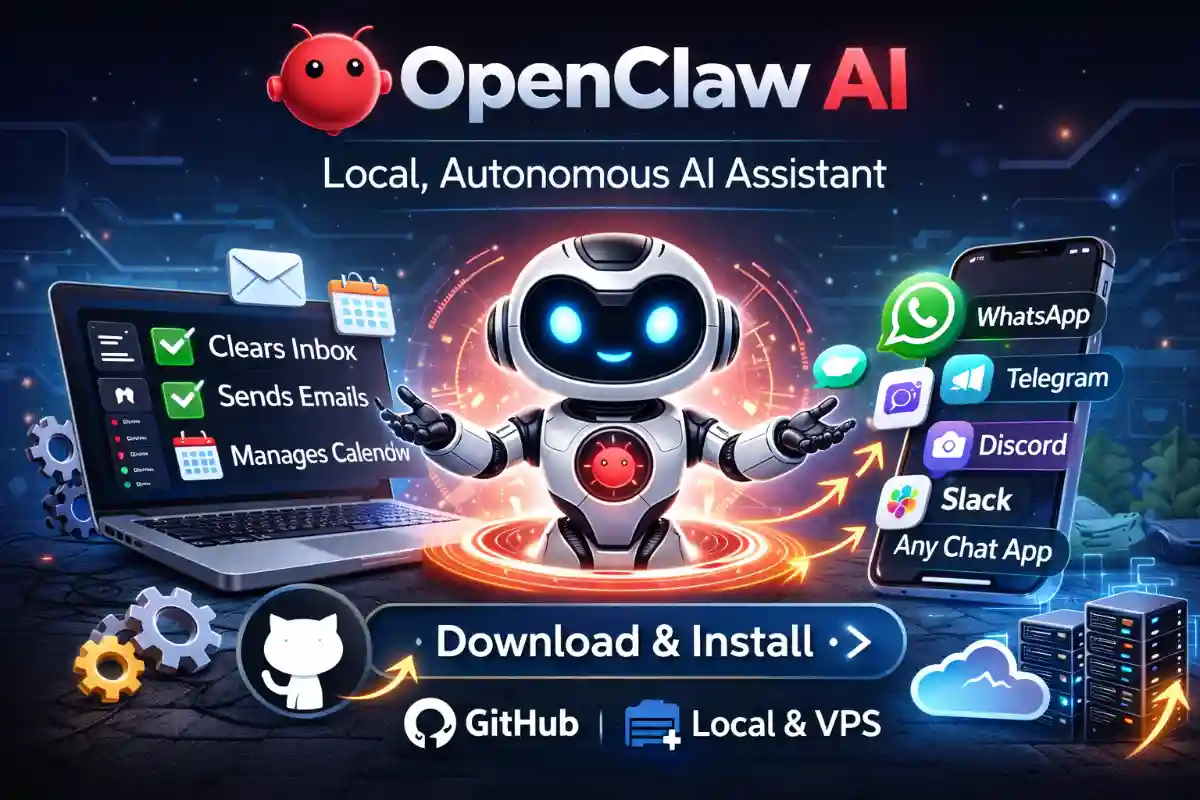
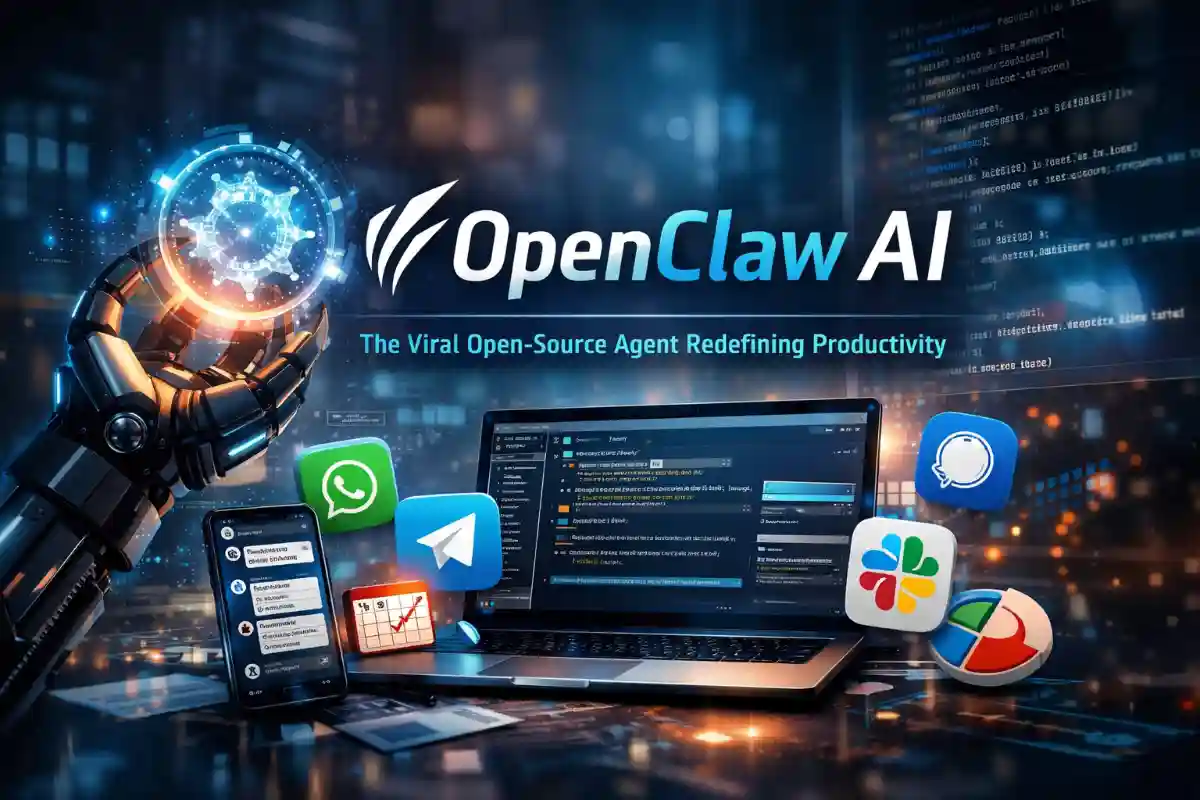
OpenClaw AI, formerly known as Clawdbot and Moltbot, is an innovative open-source AI agent developed by software engineer Peter Steinberger. Launched in late 2025, it quickly became the fastest-growing project in GitHub history, amassing over 150,000 stars in just days. At its core, OpenClaw AI is a personal assistant that operates via messaging platforms like WhatsApp, Telegram, Slack, and Signal. Unlike traditional chatbots that merely respond to queries, this agent takes action—clearing inboxes, managing calendars, sending emails, and even automating browser tasks—all while running locally on your device.
What sets OpenClaw AI apart is its agentic design, allowing it to reason, plan, and execute tasks autonomously. Powered by large language models (LLMs) such as Claude or ChatGPT, it integrates seamlessly with external APIs and tools, turning vague instructions into tangible results. For instance, users can instruct it to “book my flight and check me in,” and the agent handles the process end-to-end, drawing from real-time data and user permissions.
How OpenClaw AI Works: A Seamless Blend of AI and Automation
OpenClaw AI operates on a modular architecture that emphasizes simplicity and extensibility. It stores memory and data as Markdown files on your local disk, ensuring privacy and control. The framework uses a heartbeat scheduler to wake up at set intervals, performing tasks without constant prompting. This proactive approach mimics a dedicated assistant, handling routine chores like email sorting or file management in the background.
Setup is straightforward for tech-savvy users, involving Docker and basic configuration, though community tools like MyClaw have simplified it further for beginners. Once running, the agent communicates through chat interfaces, where users define “skills”—portable code snippets for specific actions. These skills, shared via ClawHub, allow the community to expand capabilities rapidly, from financial tracking to creative content generation.
Recent updates have enhanced its robustness, including a 1M token context window for complex reasoning, sub-agent spawning for multi-tasking, and integrations with iOS and Slack. With support for advanced models like Sonnet 4.6, OpenClaw AI delivers high-performance automation at a fraction of proprietary costs, often under $10 monthly for heavy use.
Key Features That Make OpenClaw AI Stand Out
OpenClaw AI’s appeal lies in its feature-rich ecosystem, designed for both individual and team use. Here are some highlights:
– Autonomous Execution: Beyond chat, it controls browsers, runs shell commands, and interacts with files, enabling end-to-end workflows like automated reporting or data analysis.
– Community-Driven Skills: With thousands of user-contributed skills on ClawHub, customization is endless. From integrating with prediction markets to building 3D AI environments, the possibilities grow daily.
– Local-First Security: Running on your machine minimizes data exposure, though users must manage permissions carefully to avoid risks like prompt injection.
– Multi-Platform Accessibility: Compatible with various LLMs via proxies like OpenRouter, it supports diverse models without vendor lock-in, keeping costs low and flexibility high.
These features have fueled its adoption, with users reporting significant time savings—up to 48 hours weekly on repetitive tasks—turning solo founders into efficient teams and enterprises into agile operations.
Addressing Security in the OpenClaw AI Era
As with any powerful tool, OpenClaw AI introduces security considerations. Its broad access to systems can pose risks if misconfigured, such as unintended data leaks or malicious skills. To mitigate this, the project has partnered with VirusTotal for skill scanning and introduced audit tools for misconfigurations. Community efforts like SecureClaw add guardrails, including runtime rules and prompt hardening, ensuring safer deployments for businesses.
Recent incidents, like infostealer malware targeting configuration files, underscore the need for vigilance. Best practices include using gateway tokens judiciously, avoiding exposed ports, and regularly reviewing agent behaviors. Despite these challenges, OpenClaw AI’s transparent, open-source nature allows rapid community-driven improvements, making it more secure over time.
The Future of OpenClaw AI: Toward an AI-Powered World
OpenClaw AI represents a pivotal shift toward agentic AI, where machines don’t just assist but anticipate and act. With integrations expanding into Web3, prediction markets, and collaborative networks like Moltbook, it’s fostering an ecosystem of interconnected agents. Hackathons and corporate adoptions signal its trajectory, potentially disrupting industries from finance to content creation.
As AI evolves, OpenClaw AI’s open ethos ensures it remains at the forefront, empowering users to build custom “AI workforces.” Whether you’re a developer automating code or a professional streamlining daily routines, this framework offers unprecedented leverage. In a world where AI progress outpaces human adaptation, OpenClaw AI isn’t just a tool—it’s the key to staying ahead.
FAQs
What is OpenClaw AI?
OpenClaw AI is an open-source AI agent framework that automates tasks like email management, browser actions, and scheduling via chat platforms.
Is OpenClaw AI free to use?
Yes, OpenClaw AI is open-source and free to use, though API costs may apply depending on the language model you connect.
How does OpenClaw AI work?
It connects to LLMs like Claude or ChatGPT and executes autonomous tasks locally using defined skills and integrations.
Is OpenClaw AI secure?
OpenClaw AI runs locally for better privacy, but users should carefully manage permissions and security configurations.