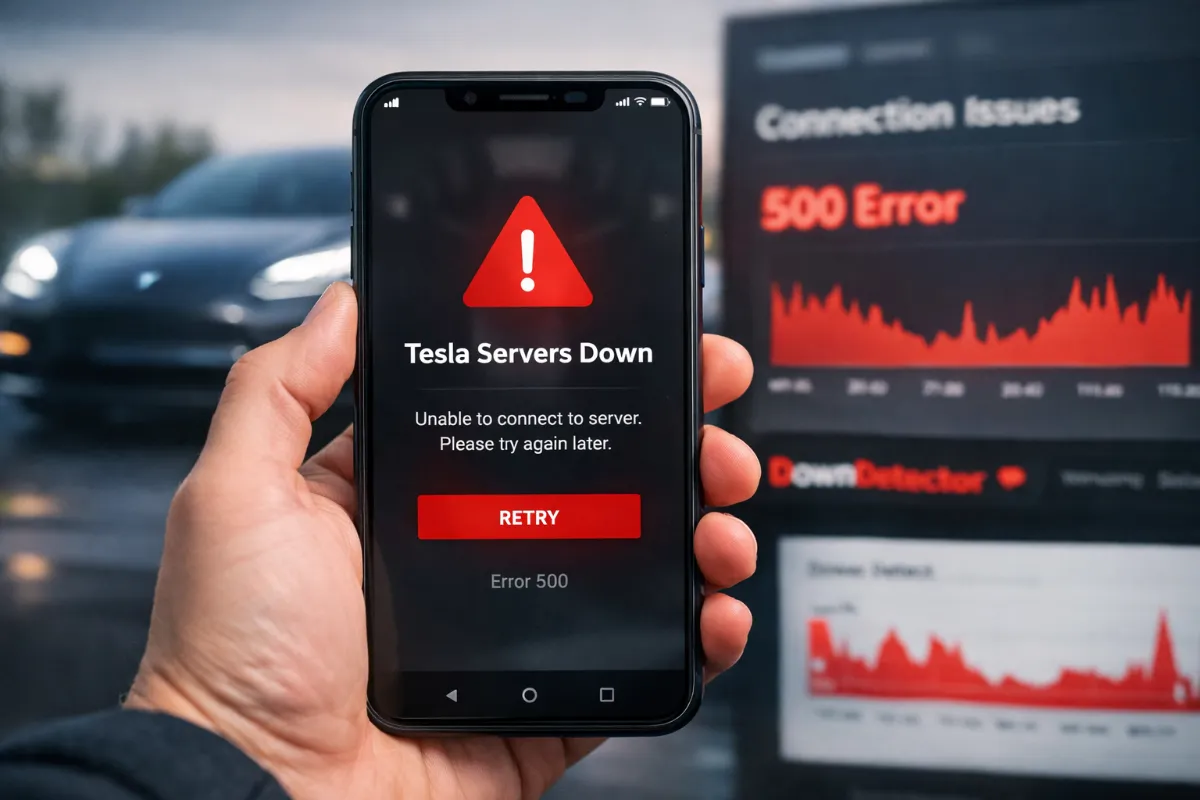
In the fast-paced world of electric vehicles, connectivity is key. But what happens when the digital backbone falters? Tesla servers down incidents, like the recent one on February 25, 2026, remind us of the vulnerabilities in even the most advanced systems. This brief outage disrupted app functionality for thousands, sparking discussions about reliability and preparedness among Tesla owners worldwide.
The Recent Tesla Servers Down Event: A Timeline
The disruption began around 5:30 AM PST, affecting Tesla’s infrastructure and causing widespread issues with the official mobile app. Users reported inability to send remote commands, monitor charging status, or control climate settings. Third-party applications relying on Tesla’s API were also hit hard, leading to a surge in error reports on platforms like DownDetector.
By 7:50 AM PST, services were restored, marking a downtime of just over two hours. While brief, the event highlighted how integral cloud services are to the Tesla experience. Independent monitors, such as Teslascope, confirmed the outage, noting peaks in 500 server errors around 6:08 AM PST.
How Tesla Servers Down Affects Owners and Vehicles
Fortunately, core vehicle access remained unaffected. Tesla’s phone key system operates via Bluetooth, bypassing the need for server connectivity. This meant owners could still unlock and drive their cars without issue, using physical key cards or fobs as backups.
However, features like preconditioning the cabin or checking battery levels remotely were temporarily unavailable. For fleet operators and those with automated routines, this could disrupt daily operations. Data from DownDetector showed 79% of reports related to the app, 19% to server connections, and a small fraction to login problems.
A Look Back at Past Tesla Servers Down Incidents
This isn’t the first time Tesla has faced such challenges. In September 2020, a complete network outage affected internal systems and customer connectivity, lasting several hours. Another notable event occurred in February 2023, impacting apps globally for about 20 minutes.
More recently, a similar issue struck on February 9, 2026, with users encountering 404 errors and temporary vehicle disconnections in the app. These patterns suggest occasional strains on Tesla’s growing infrastructure, possibly due to high demand or maintenance activities.
Tips for Handling Tesla Servers Down Situations
To stay prepared, always carry your physical key card or fob. If you encounter a 500 server error, try refreshing the app, restarting your device, or signing out and back in. For persistent issues, check status on sites like DownDetector or Tesla community forums.
Remember, your vehicle continues to function offline for driving and basic operations. Enabling Wi-Fi connectivity when available can provide a more stable alternative to cellular data during peak times.
What This Means for the Future of Tesla Connectivity
As Tesla expands its ecosystem with features like Full Self-Driving and over-the-air updates, robust server reliability becomes paramount. These incidents serve as valuable lessons, pushing for enhanced redundancy and faster recovery protocols.
For owners, it’s a reminder of the blend between cutting-edge tech and practical backups. While Tesla servers down events are rare, staying informed ensures a smoother ride in the electric future.